Garden Glow

It's one of the favorite holiday events at Missouri's Botanical Garden and you can see it through January 9, 2016. "Garden Glow" turns the Gardens into a magical wonderland with hundreds of cut-down trees brought in especially for the occasion.

The trees are bought from tree farms, where the trees are grown to be cut down. Once used for the event, the trees become compost and mulch to protect the Gardens plants through winter.

Lit trees dot walks along Missouri Botanical Garden's "Garden Glow."

Lit trees dot walks along Missouri Botanical Garden's "Garden Glow."

The lights were also synchorized to Christmas music. The Climatron was beautiful in frog green in front of changing blinking lights.

Missouri Botanical Garden Climatron with holiday decorations.

Around the first main corner of the "Garden Glow" path, the only fully-lit tree, "Big Blue."

Garden Glow's "Big Blue" tree is the only tree fully lit during the seasonal event.

Garden Glow's "Big Blue" tree is the only tree fully lit during the seasonal event.

What kind of tree is "Big Blue?" A sweet gum.

Margaret (right) and I take a turn in the Garden Glow Snow Globe.

Margaret (right) and I take a turn in the Garden Glow Snow Globe.

The Garden Glow walking tour included several photo opportunities including the snow globe, where I stopped with my friend Margaret for a quick shot.

Happy New Year and may you, and your garden, also glow in 2016!

Charlotte


Welcome winter!

Snow-covered Black Eyed Susan perennials under one of my bay windows.

Snow-covered Black Eyed Susan perennials under one of my bay windows.

When I think of winter, I think of bees huddled in their hives, plants cooling off under the soil getting ready to grow, and snow.

Winter is also a time to rest and to think about next year's gardens and projects.

Ruth Stout, the venerable easy gardener, suggests winter is also a time for oneself.

"There is a privacy about it which no other season gives you.... In spring, summer and fall people sort of have an open season on each other; only in the winter, in the country, can you have longer, quiet stretches when you can savor belonging to yourself."  ~Ruth Stout

Welcome, winter!

Charlotte

Happy Poinsettia Day!

December 12 is officially Poinsettia Day, so designated by the US House of Representatives. July 2002, the House of Representatives approved a resolution honoring Paul Ecke Junior, who is considered the father of the commercial North American Poinsettia industry.

I remember growing up in Mexico City, Mexico and having Poinsettia trees in our backyard. Paul Ecke developed a technique that causes Poinsettia seedlings to branch, making what are trees in their original habitat more manageable potted bushes. The Ecke's technique remained a secret until the 1990s when a researcher published the formula.

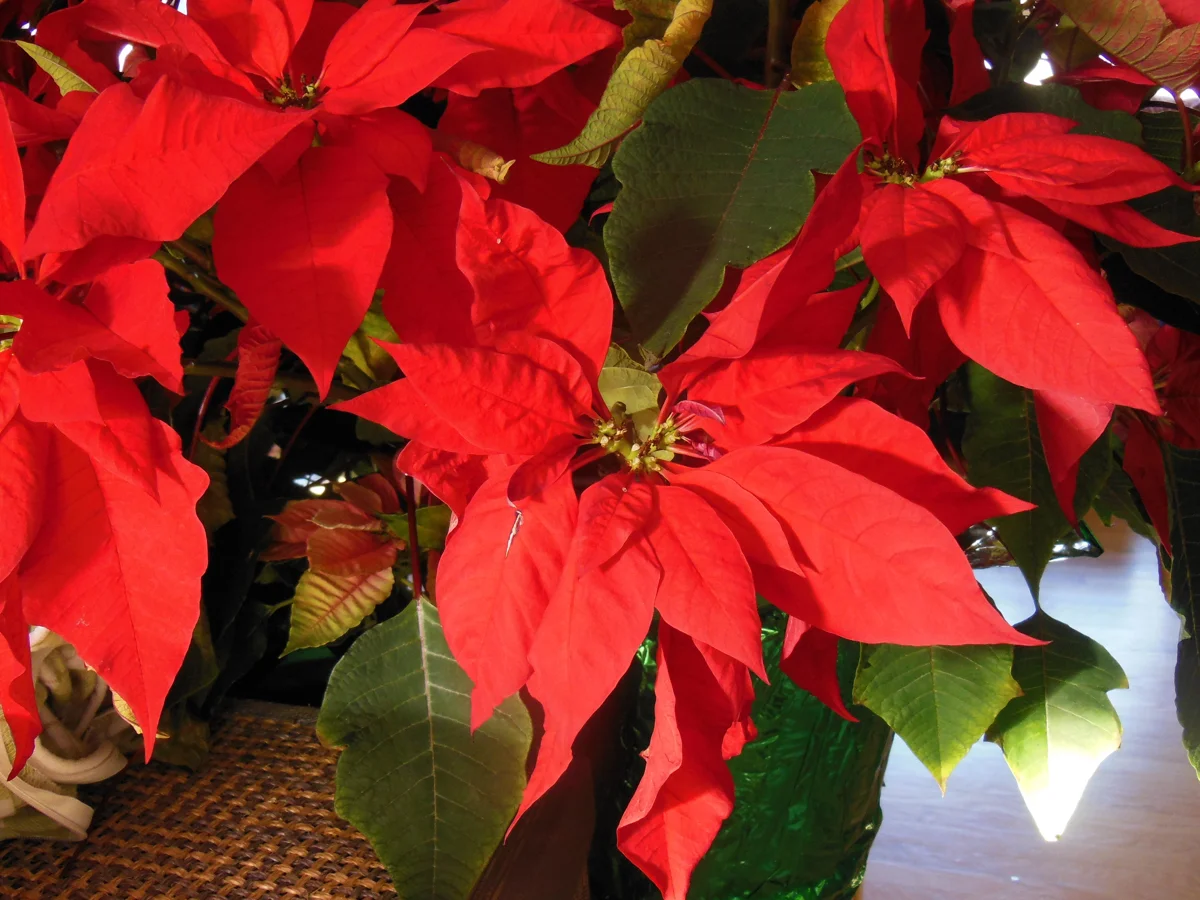
Poinsettias are part of the Christmas holiday tradition. Poinsettias are the favorite Christmas flower in both the US and Canada. Their red bracts are actually leaves that have been turned red by being deprived of light.

red Poinsettias

Aren't they beautiful? Now imagine them the size of dogwood trees!

Charlotte
Blooming Sign of Christmas Holiday

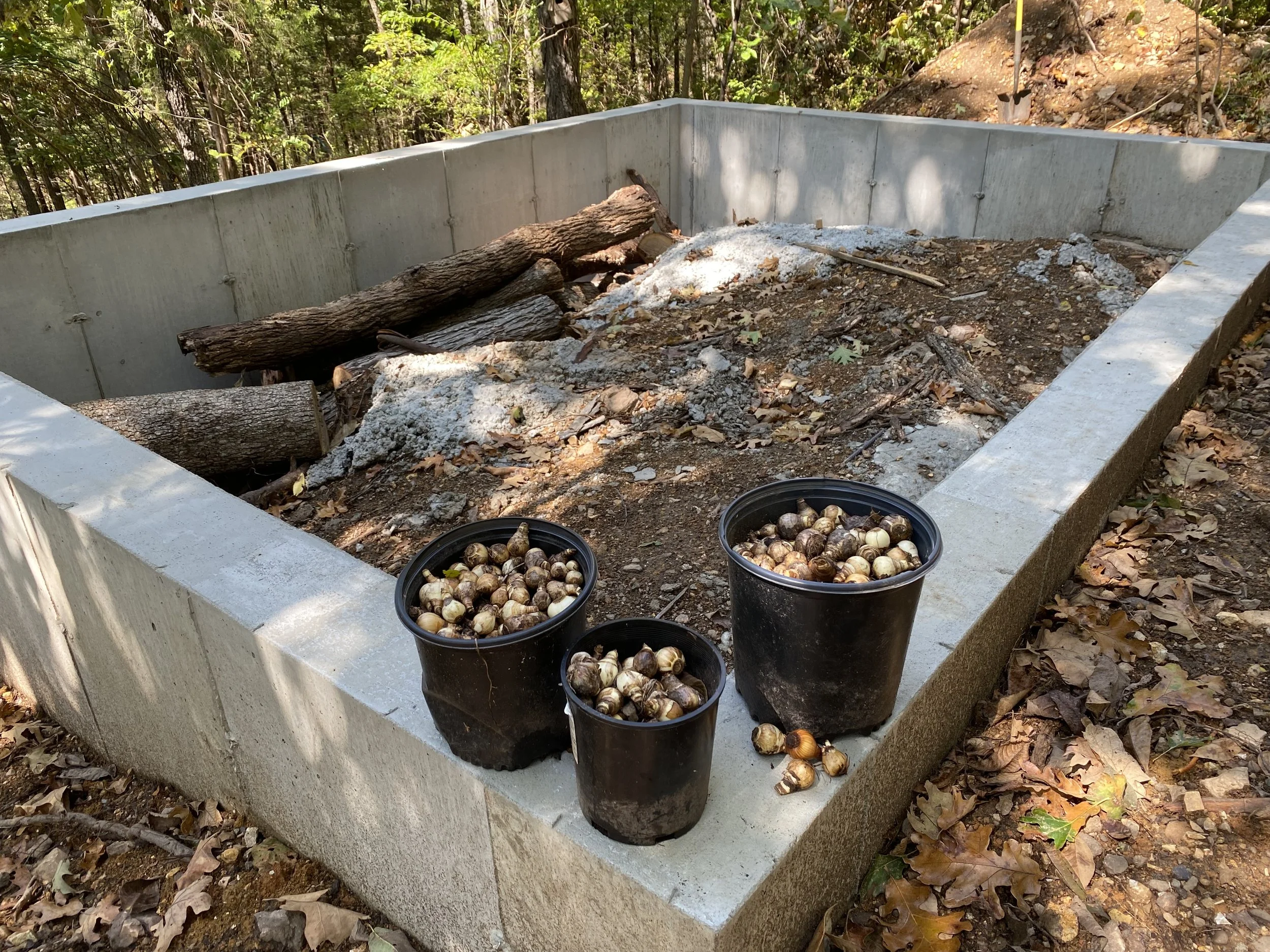
RED THANKSGIVING CACTUS IN BLOOM NOVEMBER 28, 2015 (Photo by Charlotte Ekker Wiggins)

I don't know what marks the beginning of the Christmas holidays for you but for me it's when my Thanksgiving cactus  (Schlumbergera truncata) starts to bloom. Not exactly the best of signs because some of my plants bloom as early as September!

The leaf cactus I have are a collection of plant gifts and after Christmas sales plants. Since their identification tags were missing, I plopped them into hanging baskets in a basement window with filtered southeastern exposure. The basement stays cool all year around; they prefer temperatures around 65F, although plants in my office were exposed to temperature fluctuations and still bloomed well.

My main challenge is not to over-water. These are leaf cactus, after all, requiring less water than most and more than some.

Besides cooler temperature, the other requirement these easy to grow plants have is light exposure. To prompt them to bloom, they need a period of less light. As the seasons change and fall daylight gets less, that change in light exposure is enough to tell the plant it's time to bud and bloom.

And how do I know this is a Thanksgiving cactus instead of a Christmas cactus? 

Unless you have a very old plant, most plants sold on the market today are Thanksgiving cactus, grown to bloom around Christmas for gift-giving. 

Charlotte
Nom-nom-nom....

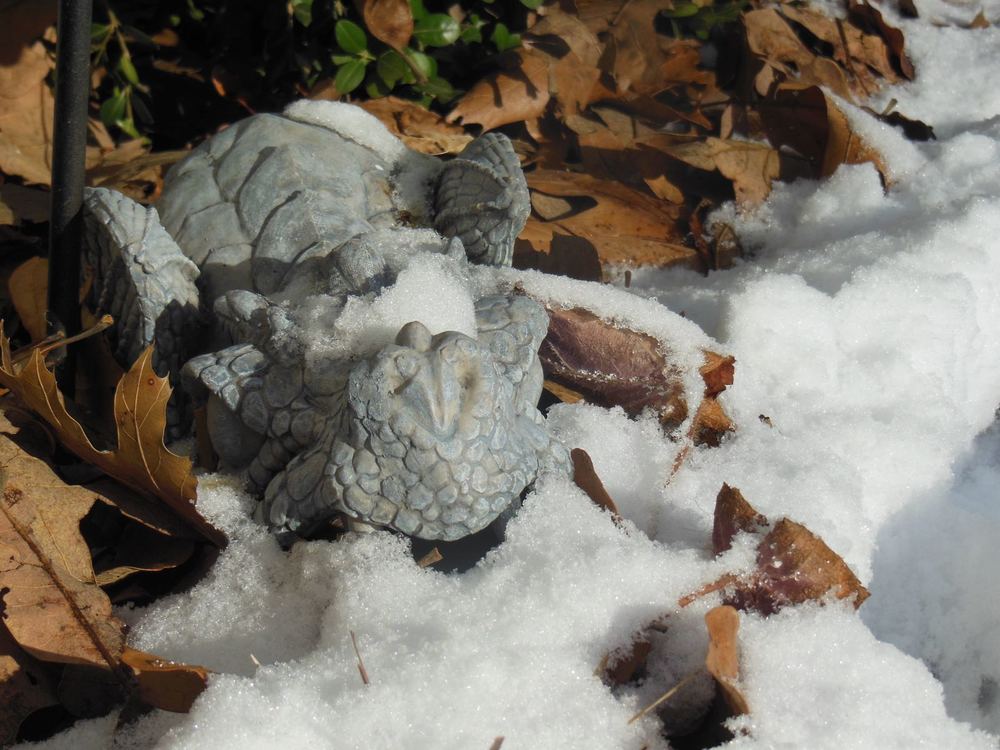
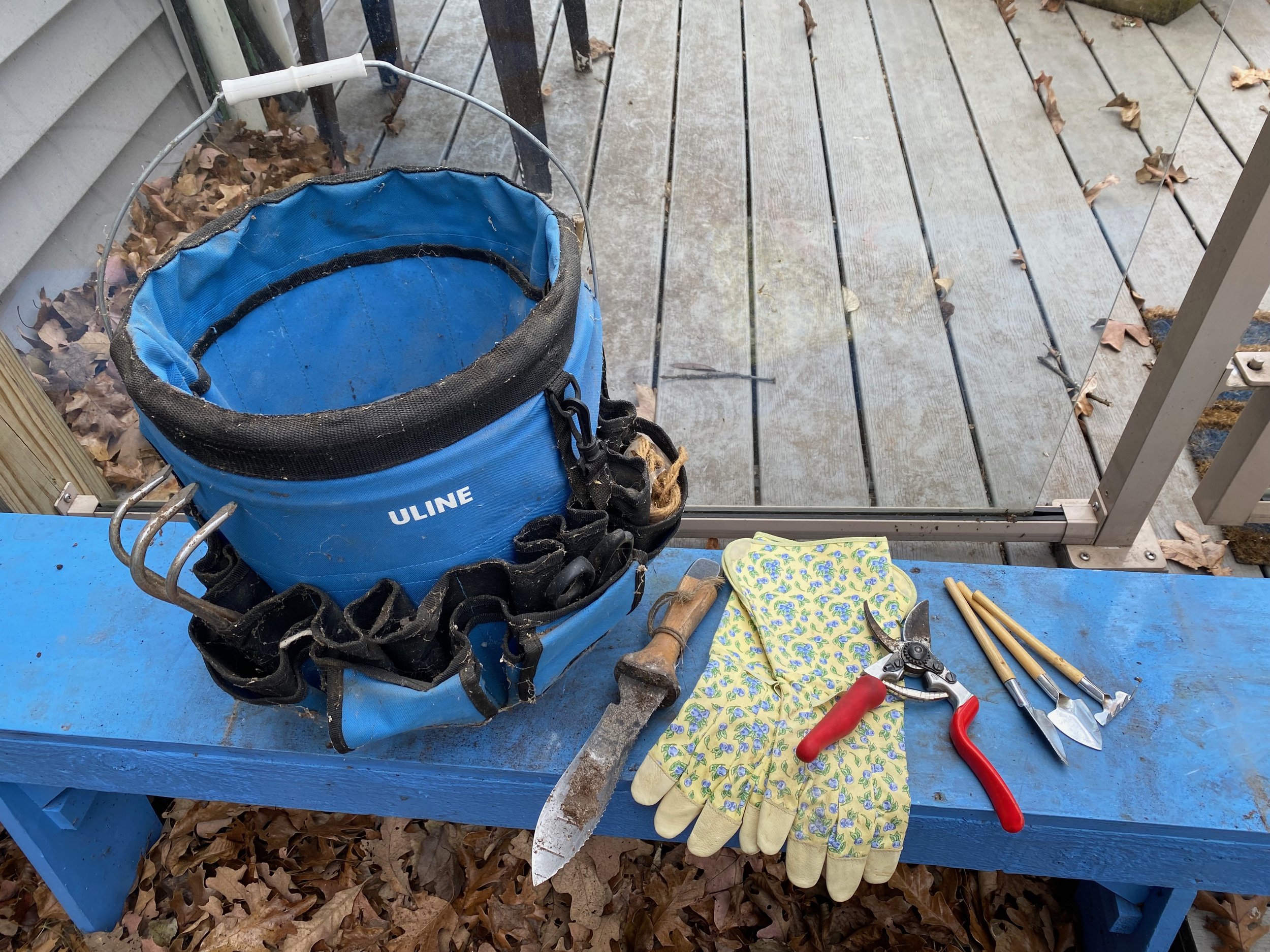
These little plastic garden dragons where a gift from my brother many years ago. They make their way around every garden season, sometimes munching fall leaves or mid-summer, dining on impatiens.

For years I moved them into a storage space over winter, only to bring them out in spring to keep my spring garden full of tulips daffodils company.

Garden decor like this are wonderful gifts. In addition to adding whimsy to the garden, they are a wonderful memento of the person who gives them.

This past fall, I forgot to bring my little dragons in so they spent this winter outside. They are not any worse for wear; I found one of them as I was filling my bird-feeders, the little open mouth apparently taking in newly-fallen snow.

Hummm, at this rate, getting rid of all of the snow on my garden could take awhile!

Charlotte

Dueling Woodpeckers

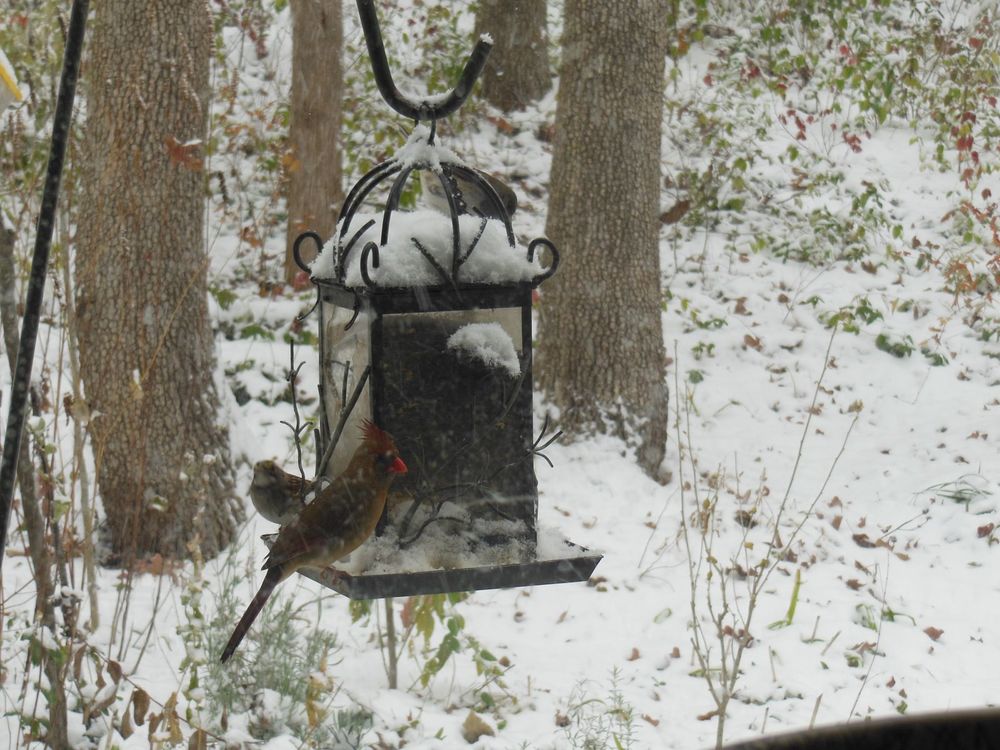
So cute, downy woodpeckers enjoying suet feeding stations right outside of my living room window.

The chair faces the garden so I can easily pop in for a few minutes and watch my feathered garden visitors.

In winter, many birds show up that I don't see in summer, not just because of leaves on trees but because this is not their summering spot.

During winter, one of the main visitors are woodpeckers, although they are in the garden all year around removing insects from tree barks.

Birds in a garden help to keep insect populations in check but not right now, everything is still quite frozen so suet is the next best thing.

Charlotte
What a lion!

The saying goes something like "March comes in like a lion" and did it ever in 2015.

In Mid-Missouri, we ended up with at least seven inches of snow over a sheet of ice, encouraging us to stay home where it was safe and warm.

The snow was a welcome layer of insulation and a source of moisture. Our water tables are still quite low and need to be replenished through snow and other precipitation.

The best part?

The saying goes on.

"March comes in like a lion, leaves like a lamb."

Something to look forward to, for sure!

Charlotte

Snow Blanket

It's easy to think of cold, icy, snowy wintery weather as being unpleasant. To a garden, it is a much appreciated blanket of insulation.

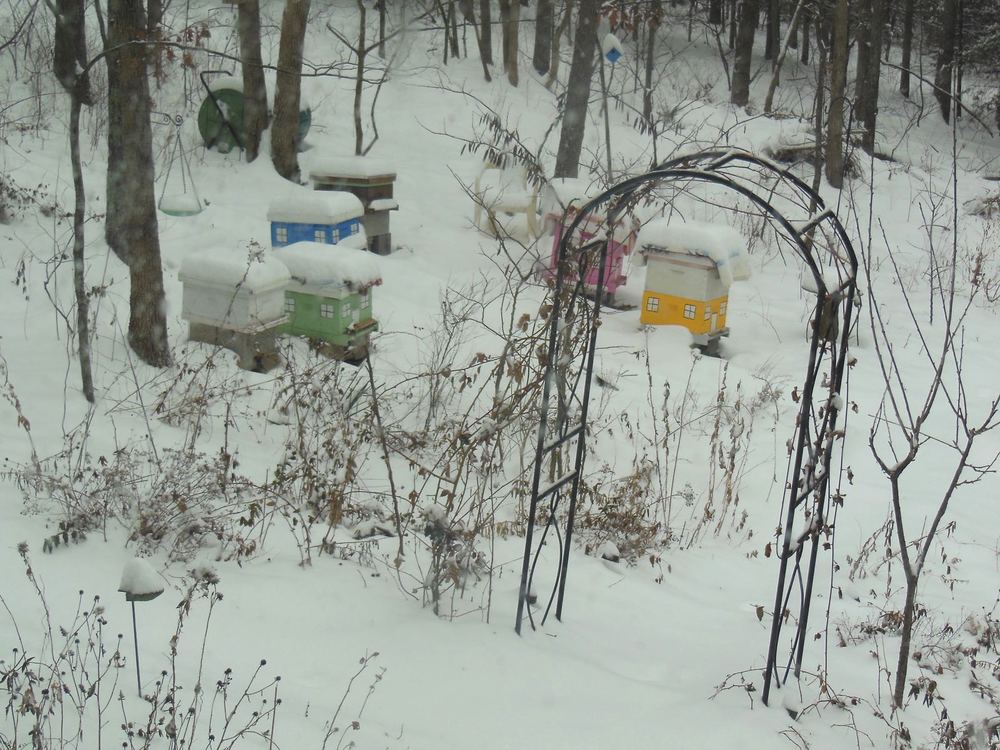
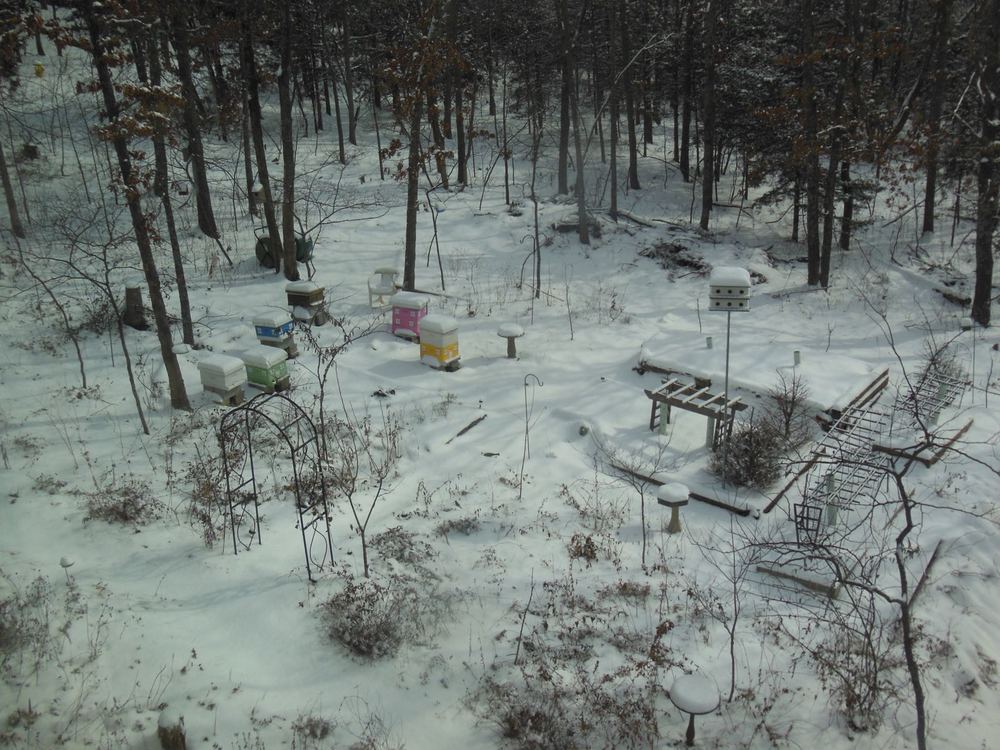
Much like an applied mulch, snow insulates plants, and bee hives, from bitter, fluctuating temperatures. When temperatures vary, it causes bees to break from their cluster and consume more honey. It also causes plants to heave out of the ground. 

As snow melts, the additional moisture keeps plant roots hydrated and alive until spring, when they seem to turn green overnight.

My bees, and new raised bed vegetable garden, are nicely tucked in.

Is your garden covered in snow?

Charlotte

Mystery Guest Solved

It's snowing February 16, 2015 in the Missouri Ozarks, a wonderful day to be tucked in at home with a pot of homemade soup on the stove and a pile of favorite bird books nearby.

It's also one of my favorite times to watch my garden and see what visitors come in and fly by.

One of the mysteries I wanted to solve was what birds have been using my tiny ront porch outside my front door. Over summer, I found shelled sunflower seeds scattered under my swing. Then earlier today, I saw several birds flying off before I could reach a window.

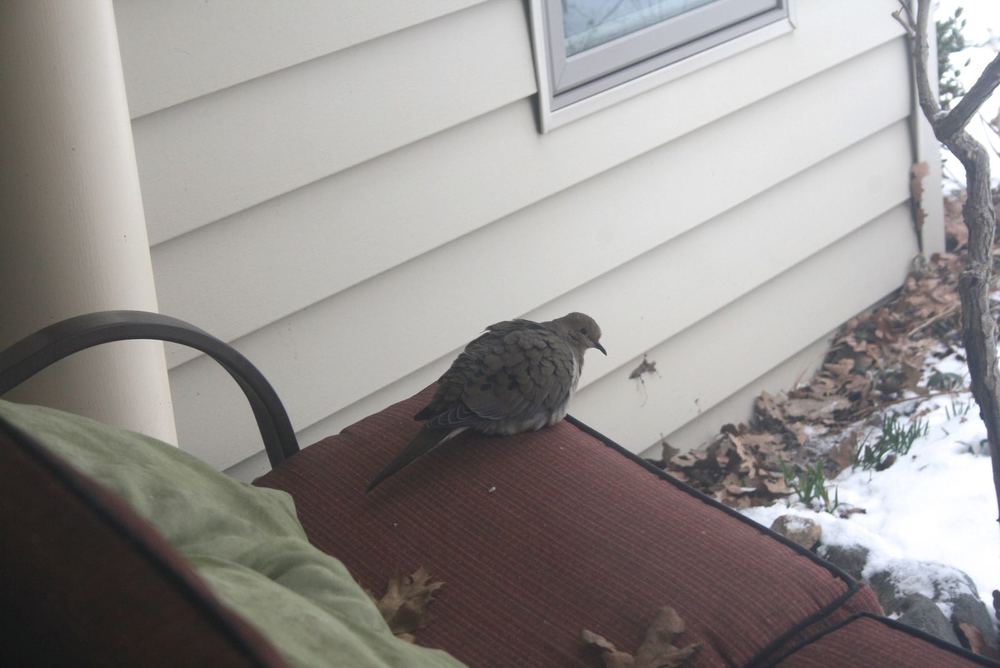
After tucking a camera in my pocket and waiting for calm to resume, I caught this bird comfortably settled on my porch swing.

Do you recognize it?

It's a mourning dove, with the most beautiful feathers when it settles in the sun. There is a bevy of them usually in my garden, sometimes just roosting on a tree limb outside my living room window.

Of course, as my brother David would suggest, but then again, maybe this bird isn't the one that has been on my deck...

Charlotte

Pulling Mums Through Winter

Did you plant chrysanthemums last fall? Autumn is the most popular time of year of the four seasons to plant them but not necessarily the best time for the plants.

Chrysanthemums are one of the most hardy cut flowers. It's why most florists use them to fill up flower arrangements and bouquets. They do need a little special care and are well worth it.

To help your mums pull through winter, make sure the plants are kept moist. Water the plants 1-2 times a month by pouring a good gallon of water around roots.

Keep mum roots mulched to minimize changes in temperature causing the roots to literally heave out of the ground.

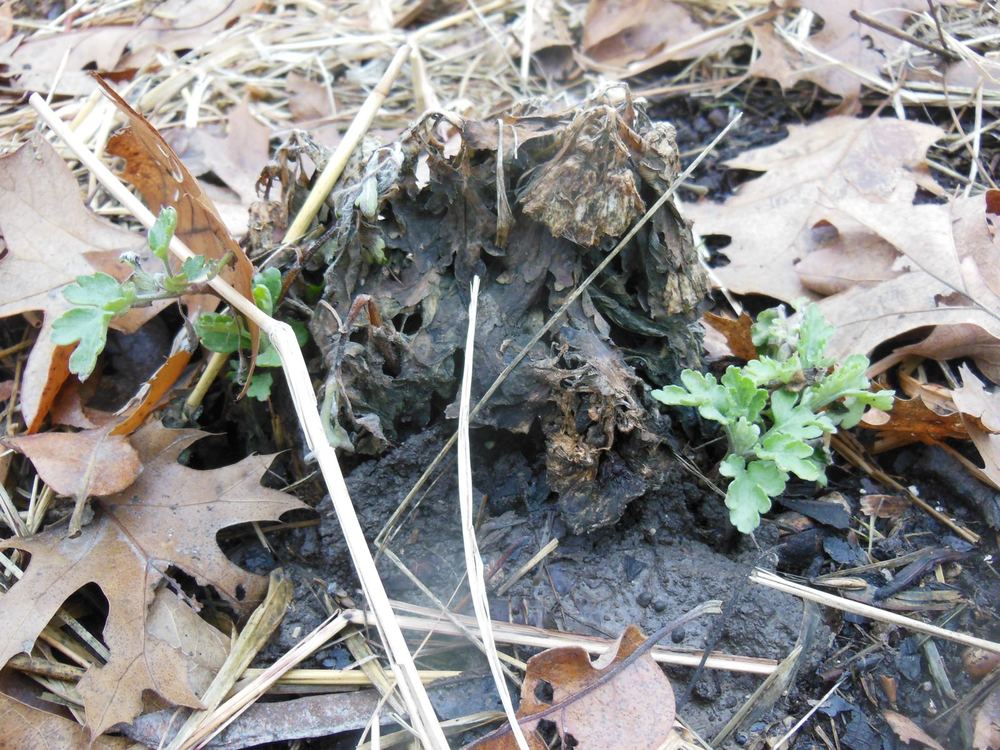
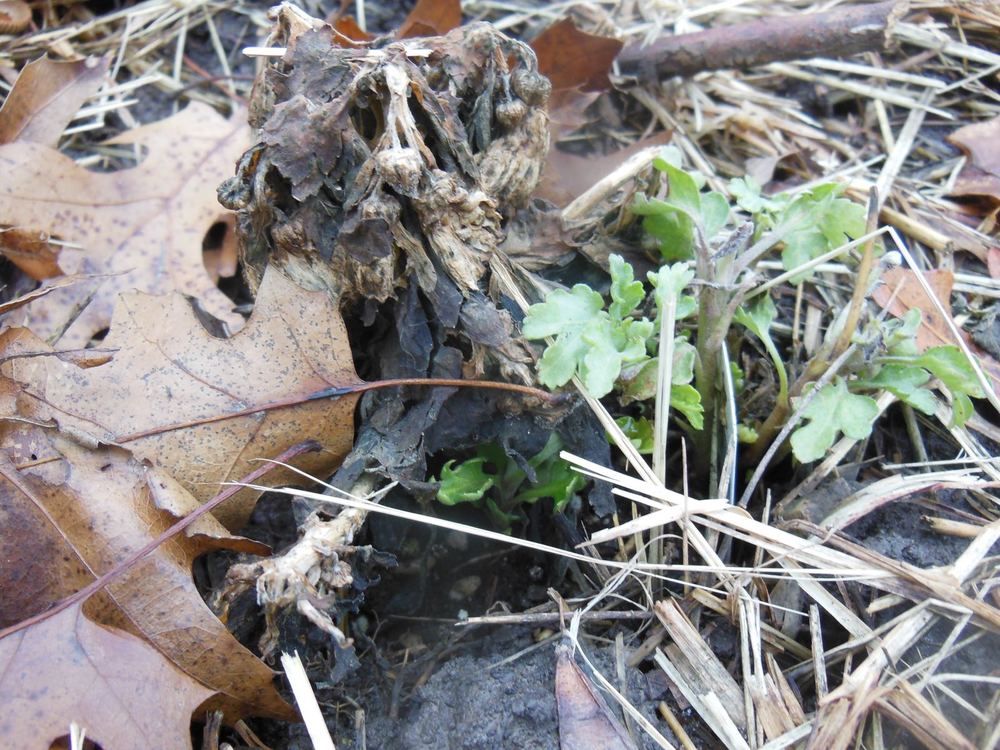
Here are a couple of mums I bought for 25-cents last fall that are making it so far through our Missouri winter by getting water and being mulched.

From the top it looks like the plant is dead. Plant starts, however, are peeking out from the sides.

By keeping roots moist, plants will be ready to grow as soon as temperatures warm up. The full season of growth will make them stronger for fall blooms and you should now have repeating blooming chrysanthemums.

Charlotte

"What am I planting?"

The question came from an office colleague who was given her last "Secret Santa" gift from me wrapped in one of my favorite finds this year, bloomingbulb.com plantable wrapping paper.

Like me, she said she gets through January dreaming of her new flower garden. Rummaging through last year's leftover seed packets, pouring over new seed catalogs and cleaning pots are only a few January chores. The rest involves a lot of daydreaming, including what to plant where.

The plantable wrapping paper includes two sheets of tissue paper, one with a design, the other white, with flower seeds nestled in between. Can you see the seeds?

To plant, the instructions say to place the paper under soil; add water and allow seeds to sprout.

What kinds of seeds? It's an impressive butterfly mix:

Here's the same butterfly mix seed list from the plastic wrap around the plantable wrapping paper in the photo. One sheet 20 inches by 8 feet wraps 3 shirt boxes and contains 2,500 favorite butterfly seeds:

Zinnia elegens 30%

Love in Mist Nigegelie damascena 20%

African Marigold Targetes erecta 20%

Cornflower Centaures cyanus 10%

Gloriosa Daisy Rudbeckia hirta 10%

Cosmo bippinatus 8%

Plains Coreopsis tinctoria 4%

This looks like a nice mix of taller flowers best planted in a sunny flower bed. If butterflies don't mind, these would also make a great source for a few cut flowers!

Charlotte


Flying Through Chicago's O'Hare Airport

Turning a corner at Chicago's O'Hare airport January 2, 2015, these lovely birds in white lights appeared to be flying towards me amidst green garlands with huge red bows.

They reminded me of summer days in Missouri when humminbirds approach as I carry sugar water bird feeders out into my garden.

The birds are even more fun up close and gave the airport corridors a dramatic holiday theme as some of us flew to catch connecting flights.

There definitely was a lot of flying going on!

Charlotte

Homemade Vertical Herb Garden

Want to have herbs handy but no room to plant them, and get a little extra privacy at the same time?

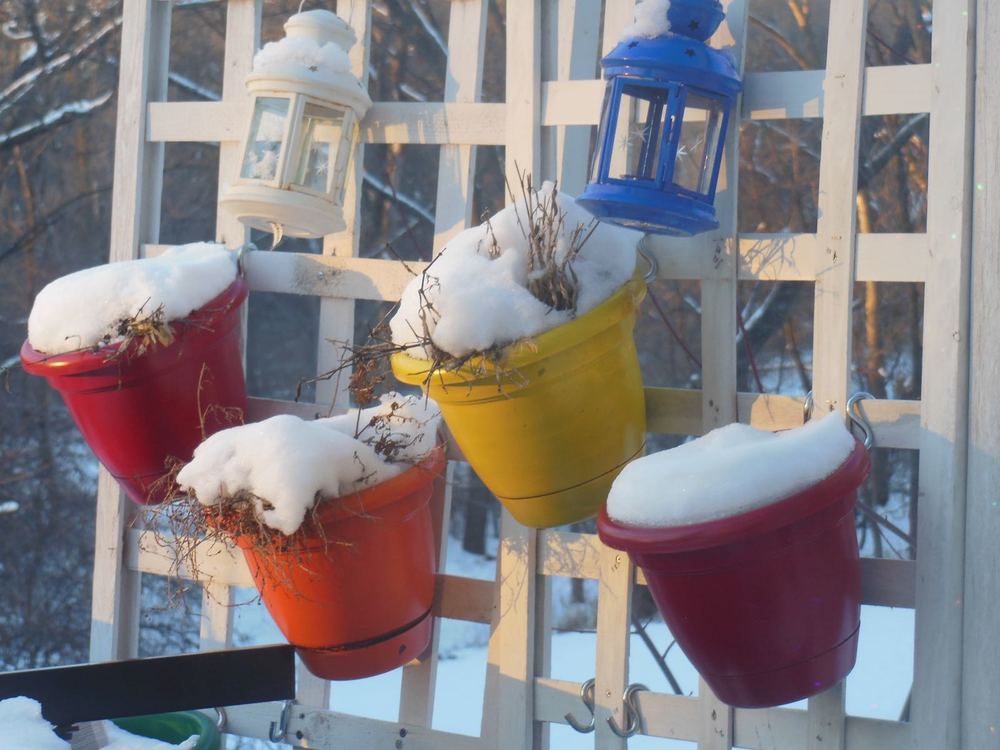
Try what my sister-in-law in Minnesota set up on her deck. A vertical herb garden using standard wooden trellises and plastic pots. The wooden trellises give her a little privacy from looking down on her next door neighbor and provide a handy space to hang pots for favorite plants and herbs.

No herbs growing in the middle of winter in Minnesota but you can better see how the pots have been hung on the pre-assembled and painted wooden trellis.

The plastic pots were originally black. My sister-in-law ordered them online because these had the longer lips on the side to hook onto the "S" hooks. 

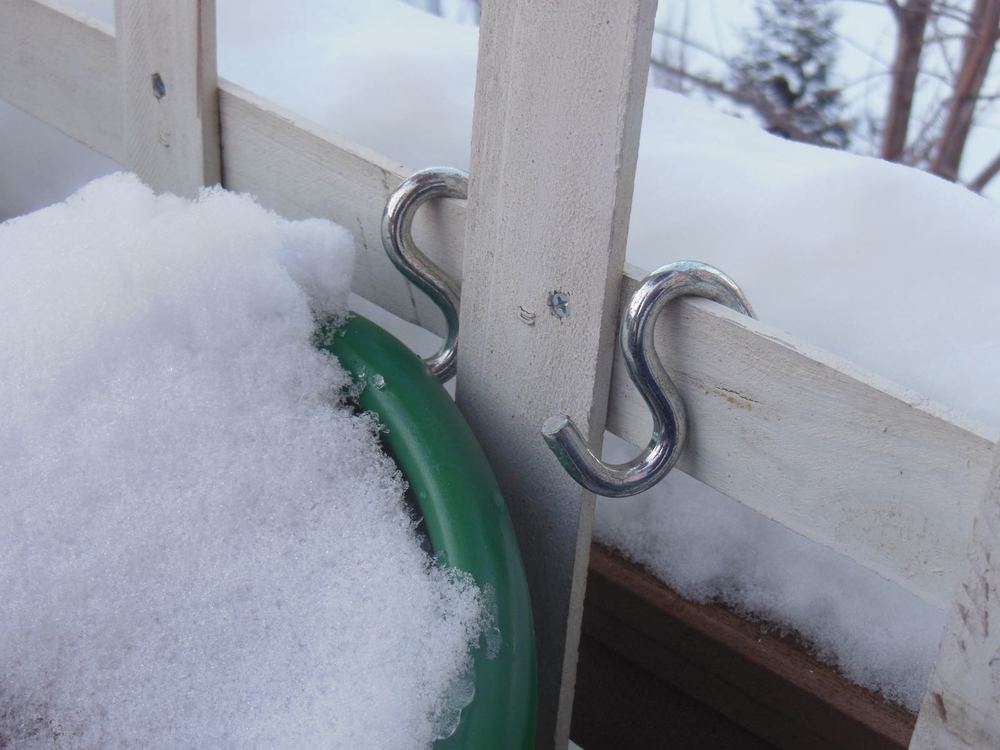
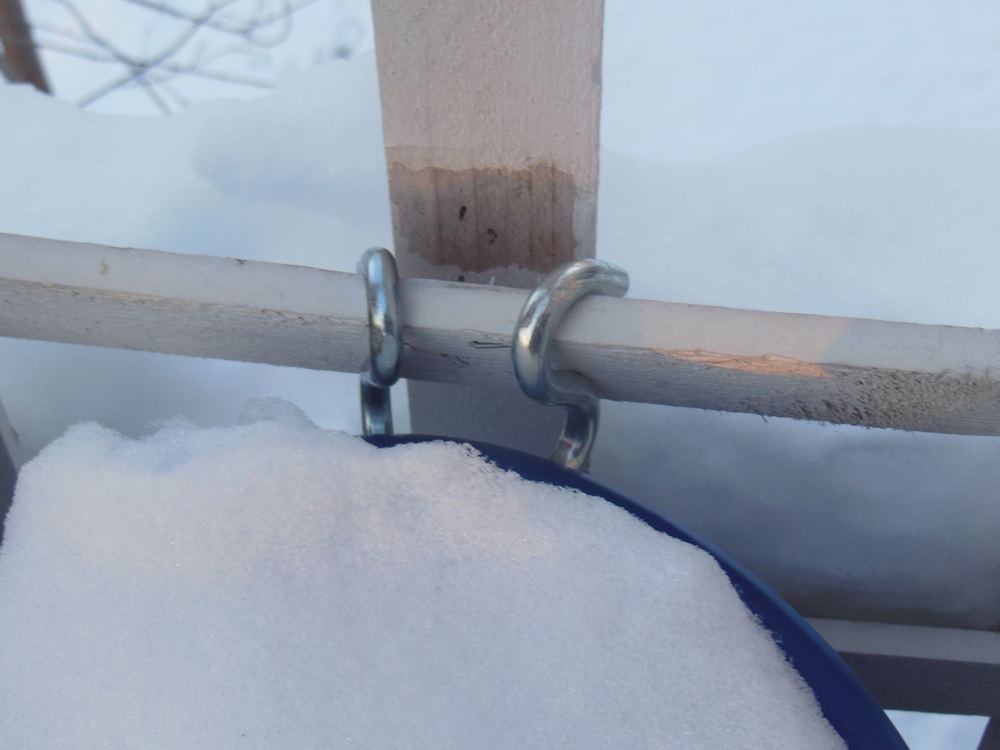
The pots are the same size and shape, spray painted different colors. To easily hang them, place two large "S" hooks about 2 inches apart.

Once in place, the "S" hooks securely hold the pots on the trellis next to the outdoors table for easy reach during meals.

I volunteered to come back next summer to thoroughly research how well this system works, especially when my brother is cooking. My sister-in-law said that was a wonderful idea!

Charlotte


Welcome New Year 2015

"The merry year is born
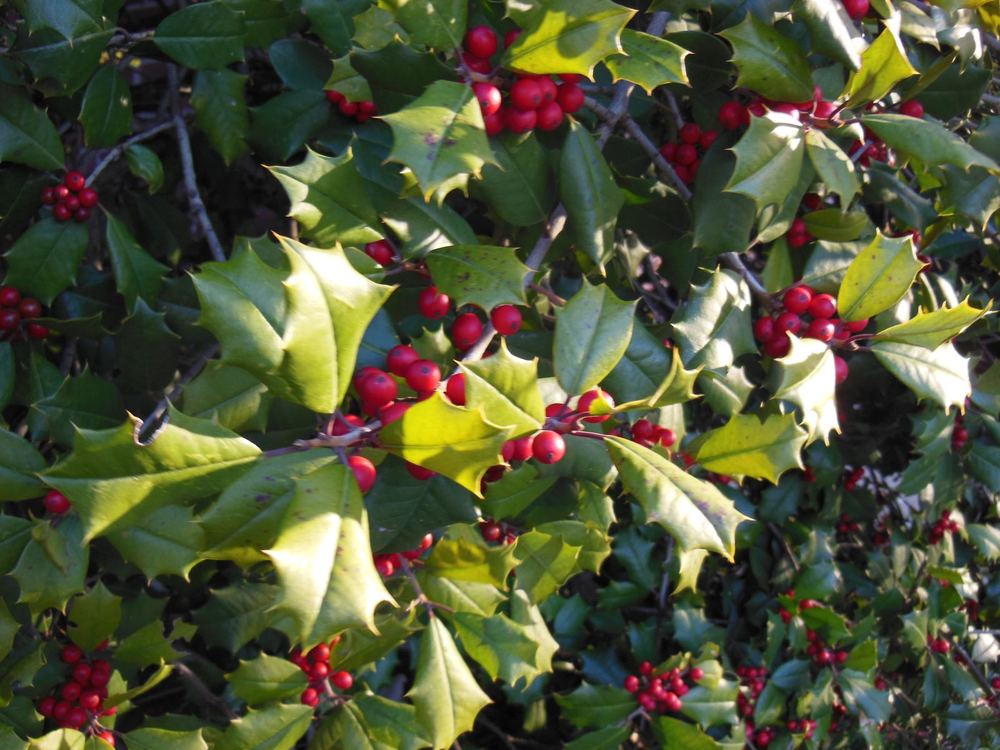
Like the bright berry from the naked thorn."

~Hartley Coleridge

So much about life we can learn in our gardens. From the joy of the different seasons to what challenges us, a garden teaches patience, perseverance, determination and compassion. We are rewarded for efforts but not always in the way we expect. Garden flowers add beauty, and sometimes sustenance, and having a helping hand from another gardener makes the journey more enjoyable.

Here's to a new year in your garden being interesting, productive and fruitful. Happy New Year!

What are you hoping to learn this year?

Charlotte


Vintage Postcard Book Marks

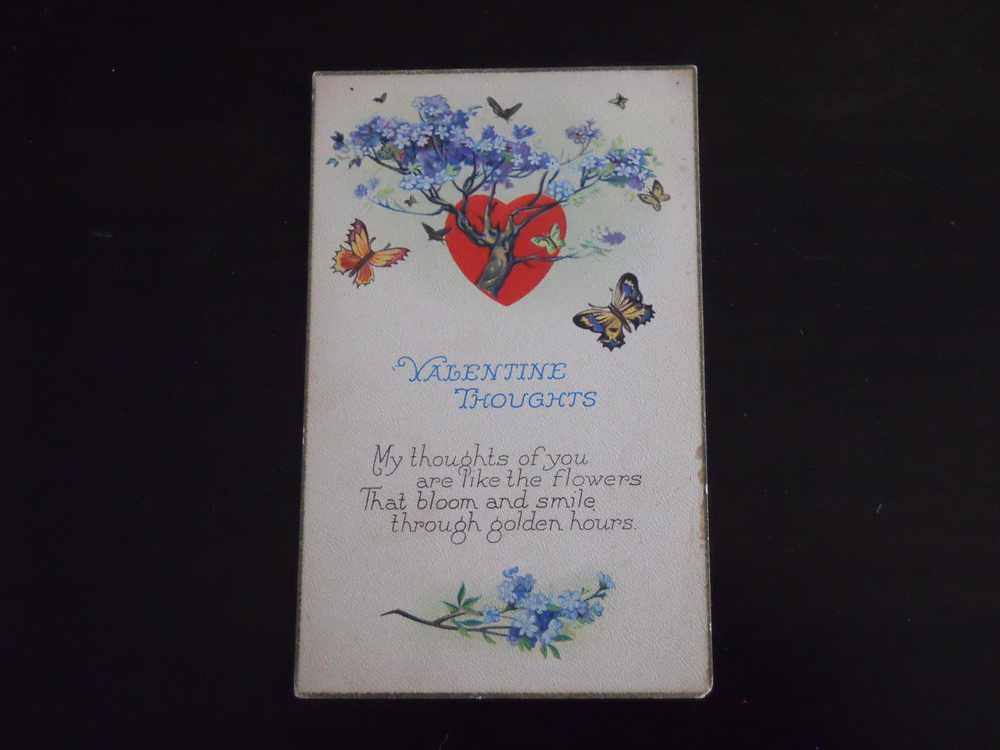
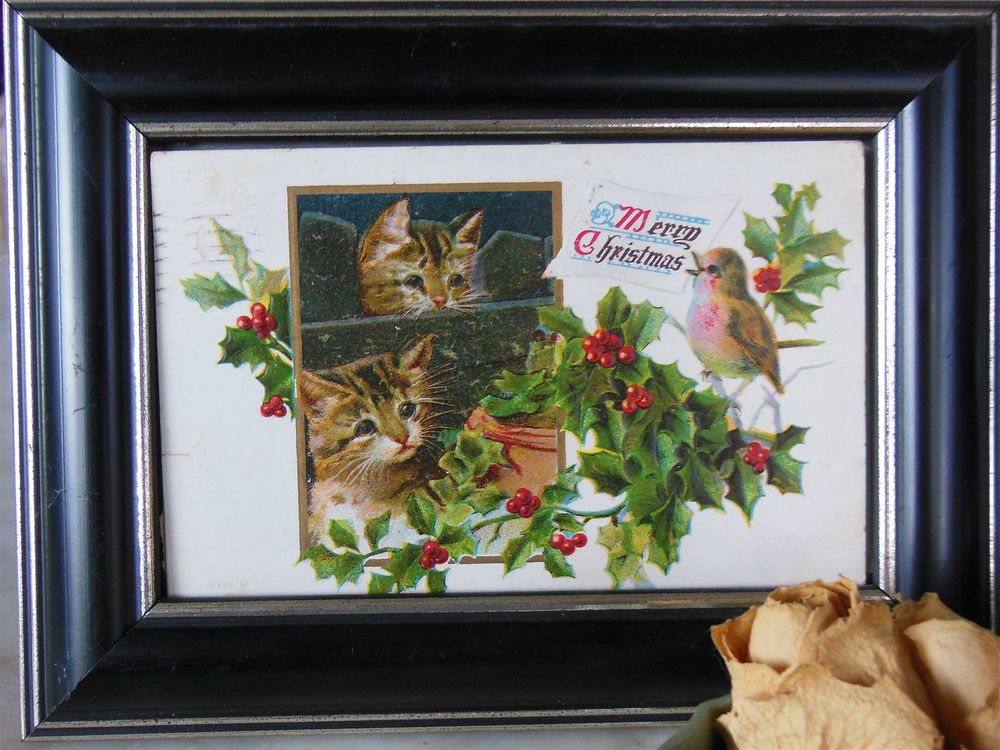
Grandma used to sneak vintage postcards in old books she would give us at Christmas. One of the first books I remember getting was an old gardening book with mid-century color photographs. I used to pour over that book; frankly looking more at the pictures at first but I eventually migrated over to words once I learned to speak English.

This vintage postcard one is one of my favorites. I now have it displayed on a table as part of my Christmas decorations. Love the cats in the vintage postcard. Love even more the memories, and gifts, of books.

May your Christmas be filled with lovely new memories. Merry Christmas!

Charlotte