How to Check Stored Seeds
/
How to Check Stored Seeds
Do you have seed packets you've never planted or are new to gardening and wanting to check if gift seeds are still viable? The "bad" news for us seed packet shoppers is that some of those may still be good to plant for a number of years.
There are a couple of ways to check if your stored seeds are still viable to plant:
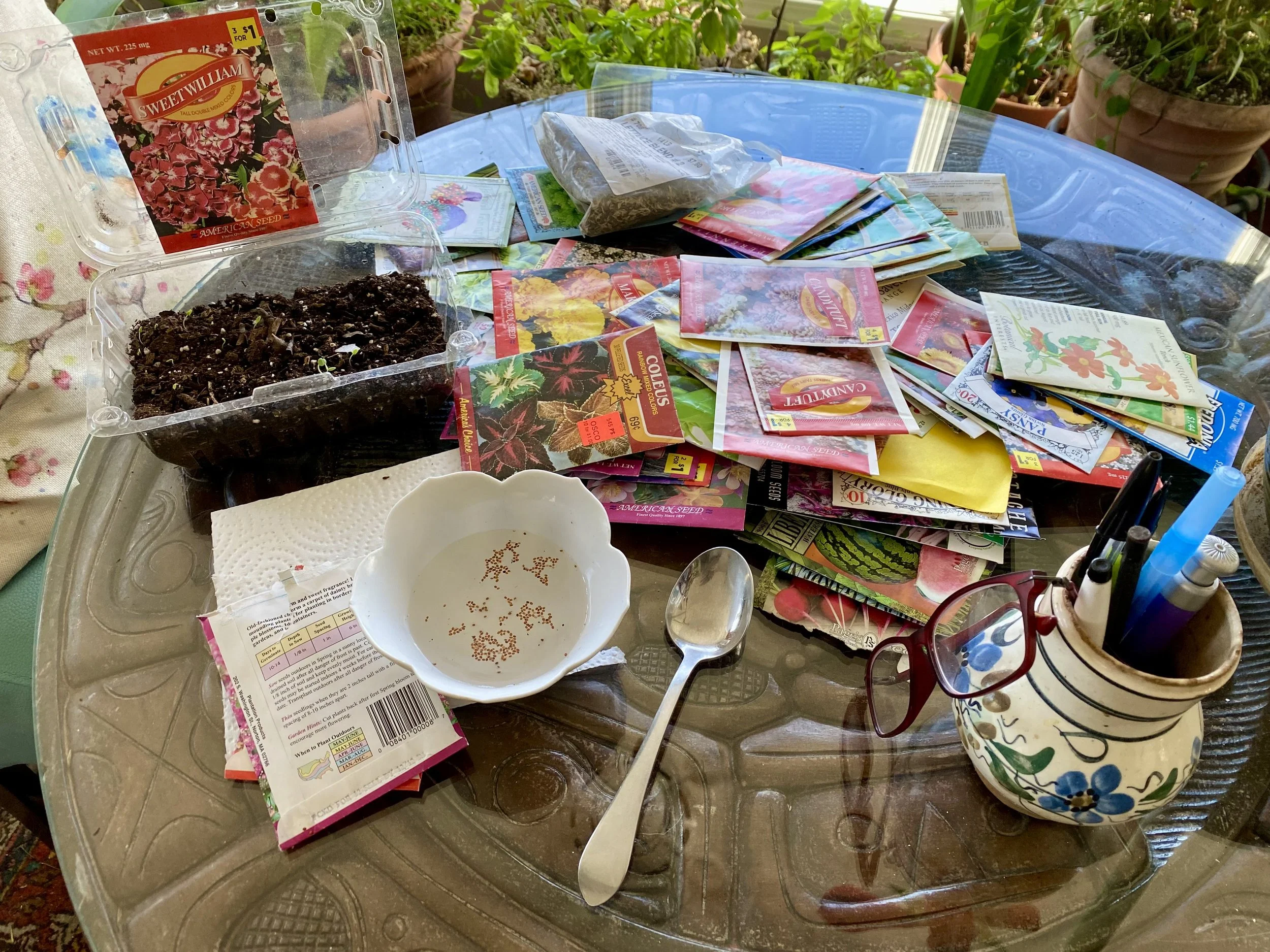
1. Floating Seeds: Place seeds in a bowl of water. Those floating at the top are dried up and no longer capable of sprouting. The ones falling to the bottom are still good and can be planted.
2. Paper Towel Check: You can also place a few seeds in a wet paper towel inside of a plastic bag for a few days. A week is a good waiting period. Viable seeds will start sprouting. The ones that are dried up will not.
Planting "Old" Seeds
Getting the wet seeds out of the water bowls can be challenging. I don't bother, I just pour the whole contents of the bowl into potting mix, make sure seeds are sprayed with water and cover. The "carpet of snow" white Alyssum seeds that were 4 years old were sprouting within hours.
How Long Do Stored Seeds Last
Depending on how they are stored, some stored seeds can last 3-5 years, some longer, depending on the species. Proper storage in airtight containers in a refrigerator or freezer can significantly extend their lifespan.
General Seed Longevity (in Proper Storage):
1–2 Years: Parsnips, onions, leeks, chives, parsley.
3–4 Years: Beans, broccoli, carrots, corn, lettuce, peas, spinach, peppers.
4–5+ Years: Beet, cabbage, cucumber, melons, pumpkin, squash, tomato, watermelon.
How to Store Seeds
Dry thoroughly and keep in dry and cool storage. Use silica gel packets or dry powdered milk in the container to absorb moisture.
For more gardening, beekeeping, cooking and easy home decor tips, subscribe to Garden Notes, my free weekly newsletter.