Help Pollinators By Not Using Pesticides

Bluebird Gardens homemade bug spray.

Help Pollinators By Not Using Pesticides

Last but not least on how we can help pollinators, from bees to butterflies. we need to rethink how we use pesticides.

I saw my first Japanese beetle drowned in one of my bird baths earlier this week. Instead of using sprays toxic to bees and pheromone traps, which only attract more Japanese beetles, I use a coffee can with a few drops of dishwashing liquid in water to drown the bugs.

I will start knocking the bugs out of fruit trees early morning when the bugs are sluggish and hand pick all I can. 

Make Your Own Bug Spray


I also make my own spray, a few drops of dishwashing liquid in a spray bottle full of water. When I need to discourage a bug from my plants, I use this combination. If I need to ramp it up, I add a few drops of hot sauce and apply using gloves so the hot sauce doesn’t get on my hands.

Pesticides As Exception


That doesn’t mean there aren’t situations where it is appropriate to use pesticides but please consider other options first. Home gardeners continue to be the leading misusers of pesticides, one of the major causes of the continued bee population struggle.

If you have to use pesticides, also please read product labels first. The Environmental Protection Agency has revised their product labels to make it clear when a product is dangerous to specific pollinators.

By helping pollinators, we are not only helping our ecosystems but ensuring our varied food supply.

Charlotte

Help Pollinators By Not Pulling Plants

Beards tongue plants have spread through one of my flower beds. Bumblebees love them!

Beards tongue plants have spread through one of my flower beds. Bumblebees love them!

How to Help Pollinators By Not Pulling Plants

Do you have plants taking over a garden corner in swaths? Leave them. Many pollinators, such as hummingbirds and bees, depend on large swaths of plants for nectar and pollen.

I know there’s a tendency to want to keep everything nice and neat but that doesn’t necessarily help pollinators. For example, turf grass takes out a potential source for cover and pollen for ground-nesters. Some 80% of all native bees make their homes in the ground.

If you know you have a nest in the ground, plan a flower bed around the nest to protect the pollinator home and minimize family members walking over it getting stung, You can use those extra plants that you want to thin out of another flower bed.

I am not saying you shouldn't think out flower beds; sometimes it's necessary. Just thin out flower beds later in the season when temperatures are more bearable and you have a better plan for where the extra plants will live.

Next, how to help pollinators by not using pesticides.

Charlotte

Help Pollinators by Properly Watering Garden

Bluebird Gardens Watering Can and Wand

Water Plants Underground

Planting milkweed and other native plants is a popular way to help pollinators but our temperatures are too high for many plants. 

If you see milkweed and other natives you planted earlier dying in these hot temperatures, keep them watered with an underground wand. Surface watering usually evaporates in these hot temperatures so concentrate on getting the water underground. Deep watering will help keep roots alive and the plants may make a recovery next year.

Water Early Morning

I know it's tempting to water when it's cool in the evening but it is better to water early morning. That way plants get a good drink before the heat of the day and sun helps control any fungus that moist soil may attract.

Hot Temperatures Mean No Pollen

If you also see the plants stop flowering, that's a survival move. Plants will stop producing pollen when temperatures are higher than 90F for several days. Some people discard the plants because of the lack of flowers but if they make it through hot conditions, they may grow and bloom again next year.

Next, how to help pollinators such as butterflies, birds and bees by not pulling plants.

Charlotte

Help Pollinators By Providing Water

Honeybees in a Bluebird Gardens bird bath.

Missouri is setting new heat records this year, a time to be reminded there are ways to help pollinators that doesn't include planting. 

One of the most critical steps gardeners can take is to provide water sources. Pollinators, wildlife, pets - even gardeners - all need water, especially when temperatures are so punishing.

Provide Pollinators Water Sources

Whether it’s a plant saucer with rocks, a bird bath with rocks and sticks, or a tiny concrete swimming hole with safe landing spots, provide a clean, daily water source.

Birds will access water to drink, bathe and keep cool. Butterflies, bats, hummingbirds, moths and bees, both native and honeybees, also need water to stay cool and hydrated. Honeybees carry water back to the hive to share with her sisters.

How Much Water?

Water doesn't have to be deep. If provided in a shallow container, however, check the water level a couple of times a day. Temperatures over 90F quickly evaporate any water sources.

If providing water in bird baths, add rocks and sticks to give small flying pollinators like butterflies, moths and bees a safe place to land.

Next, a reminder on how, and why, to keep plants for pollinators also watered.

Charlotte

Memorial Plantings

Head stones and photos are not the only way to honor someone's memory.

Over the years, our family has had a number of trees planted in memory of loved ones passed. There's a plum tree blooming on Leavenworth in San Francisco with a placque in memory of my Aunt Lenore. Along Rolla's Acorn Trail, an oak tree was added in memory of a fellow City Councilmember who died while in office.

In my one-acre hillside garden, a number of plants bring back memories of loved ones; iris for my Mom, who had lovely iris flower beds in our farmhouse in southern Illinois. Miniature fruit trees among flower beds are in memory of my father, descendant from a long line of Hungarian farmers. He also added a fruit orchard on our southern Illinois property but I don't recall picking much fruit.

To some, visiting a grave is a way to honor those no longer with us. All I have to do is walk into my garden.

Mom, I miss you.

Joyce+Ekker+Memorial+Bench.jpg

Charlotte

How to Pick Blackberries

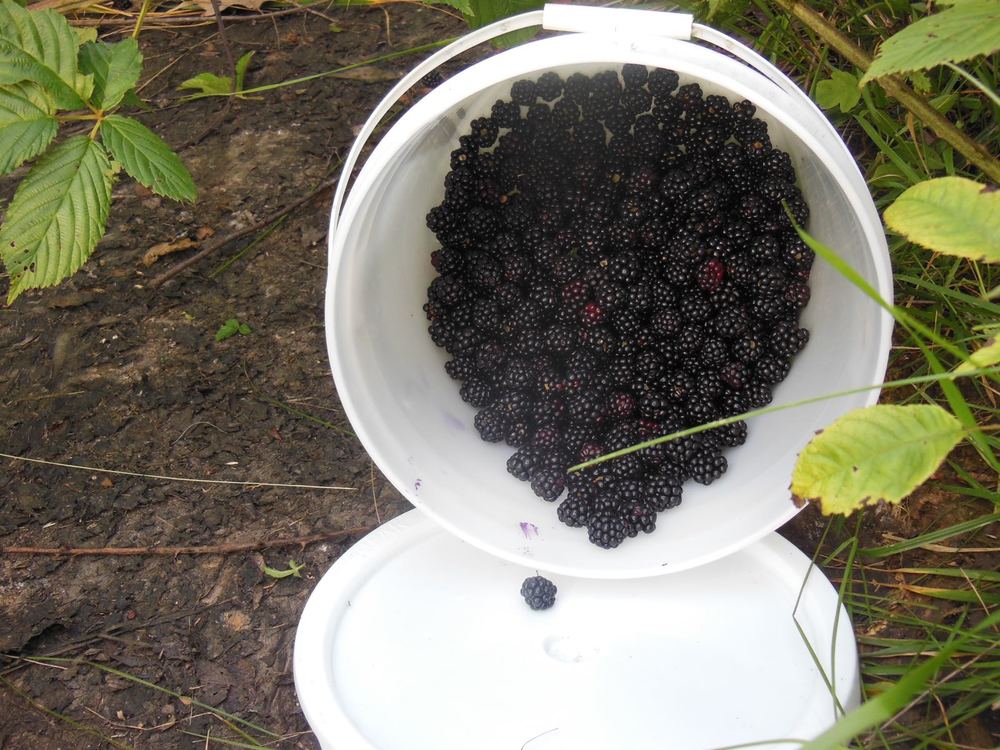
There are so many fruits available in summer from cherries to watermelon. One of my favorites are so tempting, little dark berries at the tips of arching shrubs available in north America mid-summer. Little does one realize how thorny these plants can be!

Blackberries grow in almost all continents, a plant so flexible it has adopted to a wide range of climates. Regardless of where you are planning to pick them, make sure you are:

  • Wearing a thick pair of pants to catch thorns before they hit skin.
  • Boots if you're walking into a blackberry patch after a rain. Some plants grow shoots that can't be seen above soil but you sure can feel them when you step on them.
  • Don't wear a long sleeve shirt, it will just get caught in thorns.
  • Gloves are optional but if you do wear them, select a pair with good finger dexterity.

When picking, go slowly and focus on berries at the ends, away from thorns. Some berries look ripe but may not be so make sure you have good lighting on the plants.

Worth the effort?

You bet!

Charlotte

Thought for Today

There are a lot of ways to successfully garden but one of the basics is to have, and know how to have, good soil.

Soil is an amazing ecosystem with millions and millions of microbes. A teaspoon of soil has more micro-organisms than humans currently living on earth, each group of microorganisms with a specific contribution they make to the health of all.

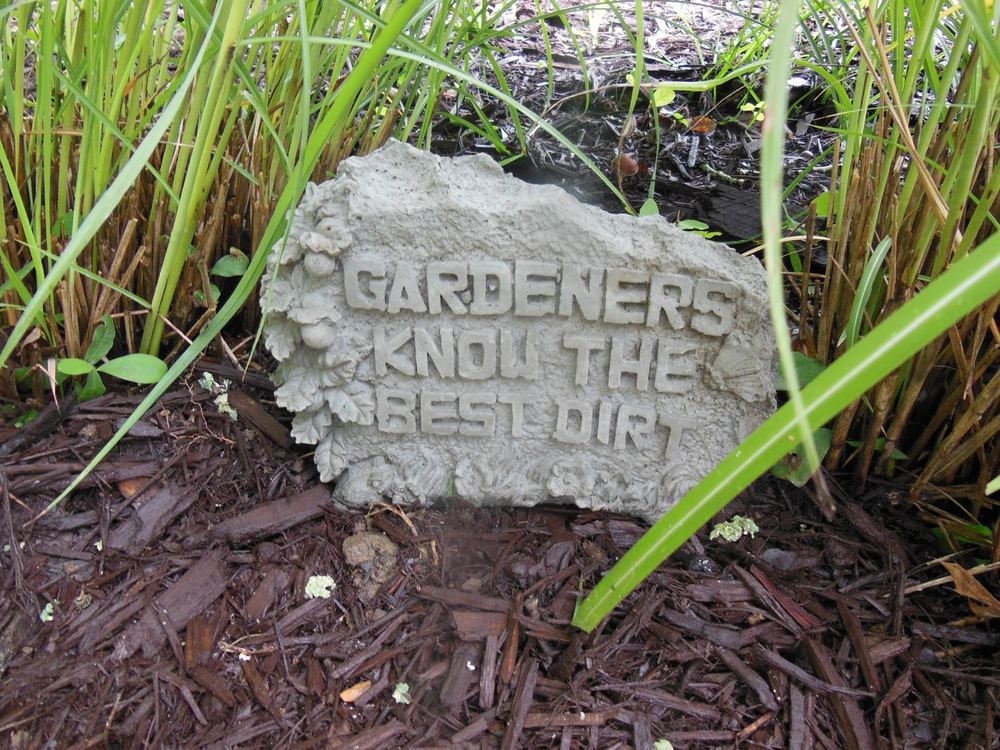
A garden is only as successful as the soil in which a garden grows. Gives new meaning to this charming concrete garden sign, don't you think?

Charlotte

Give the Whole Plant, Not Just Flowers

I used to tell my husband instead of spending a fortune on cut flowers, please buy me a rose plant.

Better yet, let's go to a local nursery and pick one out together.

Once planted in right conditions, roses will bloom for years, providing a regular supply of cut flowers. Check with your local garden club or master gardener to find out what roses do best in your USDA growing zone.

Better yet, you may have native roses.

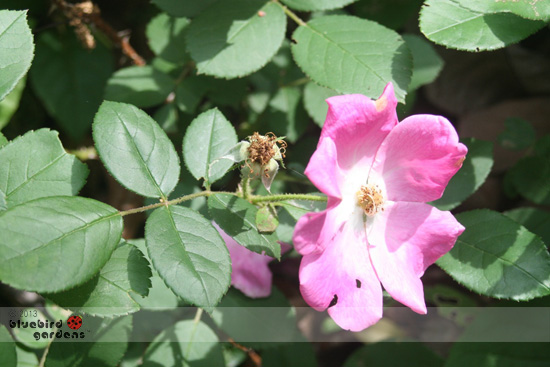
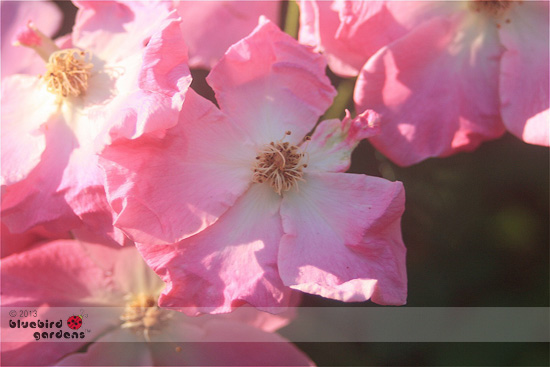
These are rosa setigera or "prairie rose," a Missouri wildflower often found along roadsides, fences and rights-of-way. I invited a start into my garden many years ago. They now grow in a garden corner and bloom for several weeks mid-spring.

Charlotte

Long-Lasting Cut Flowers

There's nothing sadder than a beautiful bouquet of cut flowers that fade almost immediately after placing them in water. Some wildflowers don't last long, either. Luckily, you can find long-lasting flowers at local florists and grocery stores almost all year around if you know what to pick. One of the longest-lasting cut flowers is Alstroemeria, also known as Peruvian lilies. Originally from South America, they bloom in a range of colors from white, pink, purples and yellows to variegated reds and burgundies.

When picking Peruvian lily bouquets, make sure the leaves are crisp and firm, and that no blooms are wilted or falling off. If there is any wilting, you may be looking at flowers that are already a week or so old.

Also check leaf tips to make sure they aren't yellow or turning brown, you want leaves that are completely green.

An office colleague was given a bouquet of purple Peruvian lilies. They lasted a good two months with weekly fresh cuttings off their stems, and a change of water. These yellow Peruvian lilies bloomed for a good six weeks before they started to wilt. Keep them away from heat and direct light. Make sure to remove green leaves that may end up in water to keep water fresh.

Charlotte

Can You Name This Caterpillar?

It's easy to think of caterpillars as garden nuisances.

Until you remember what they become after only a few weeks.

You can spare a few green leaves for this one, can't you?

It will soon be a Viceroy butterfly, often mistaken for a Monarch Butterfly.

Butterflies are among pollinators that keep gardens healthy.

Charlotte
You Looking at Me?

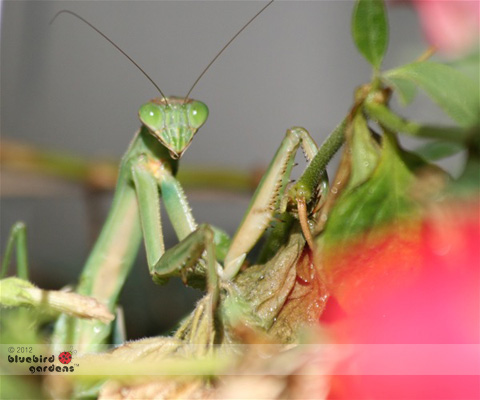
These fascinating garden insects are sometimes called "praying mantis," other times "preying mantis." Both are accurate descriptions of these alien-looking bugs that sometimes hold their barbed front legs in a praying pose. Praying mantis are an effective part of a garden's natural insect management. They eat leaf-eating bugs including grasshoppers, moth larvae and roaches.

Now that's an answer to my prayers.

Dayflower

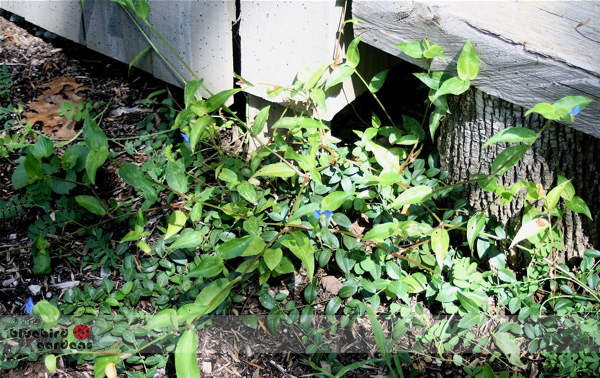
Like daylilies, day flowers only live one day.

They are a native of Asia but have established themselves nationwide.

Their fleshy stems and long green leaves are often treated as weeds.

They grow at awkward angles and where you least expect them.

I encourage them to stay.

They are one of the true blue self-starting flowers in my garden.

Visiting Jerusalem Artichoke

When I first moved to my Missouri limestone hill, there were a number of wildflowers blooming including jerusalem artichoke. According to Edgar Denison's Missouri Wildflowers, Native Americans ate the tubers.

I haven't tried yet but it's on my to do list if I ever pull any out of their current flower beds.

I like them just the way they are...

Versatile and Edible Marigolds

Did you know the leaves of marigolds have been used to remove warts?

I plant marigolds to help keep bugs out of my garden.

Marigolds are grown and harvested in Mexico to be added to chicken feed. Chickens eating marigold-enriched feed produce eggs with a deep yellow color.

Marigold blossoms themselves are quite edible for humans, too, and are often used in egg and cheese dishes.

The blossoms can make a yellow dye for fabric.

Double Peach Tropical Hibiscus

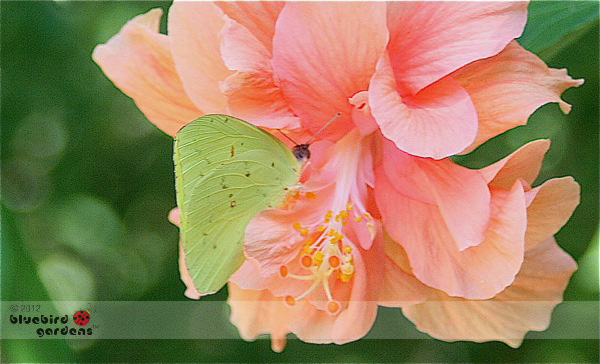
One of my first gift plants after graduating from college eons ago was a double red tropical hibiscus I named Theo. When Theo died as the result of thunderstorm injuries, I adopted Anita, a peach-colored double red tropical hibiscus. Anita spends summers on the deck, then winters over in my living room when, in the middle of cold January, she blooms. December and January are summer months in South America, where tropical hibiscus originate.

Anita has many visitors during summer including this chartreuse sulphur butterfly.