Free and Bushier Plants
/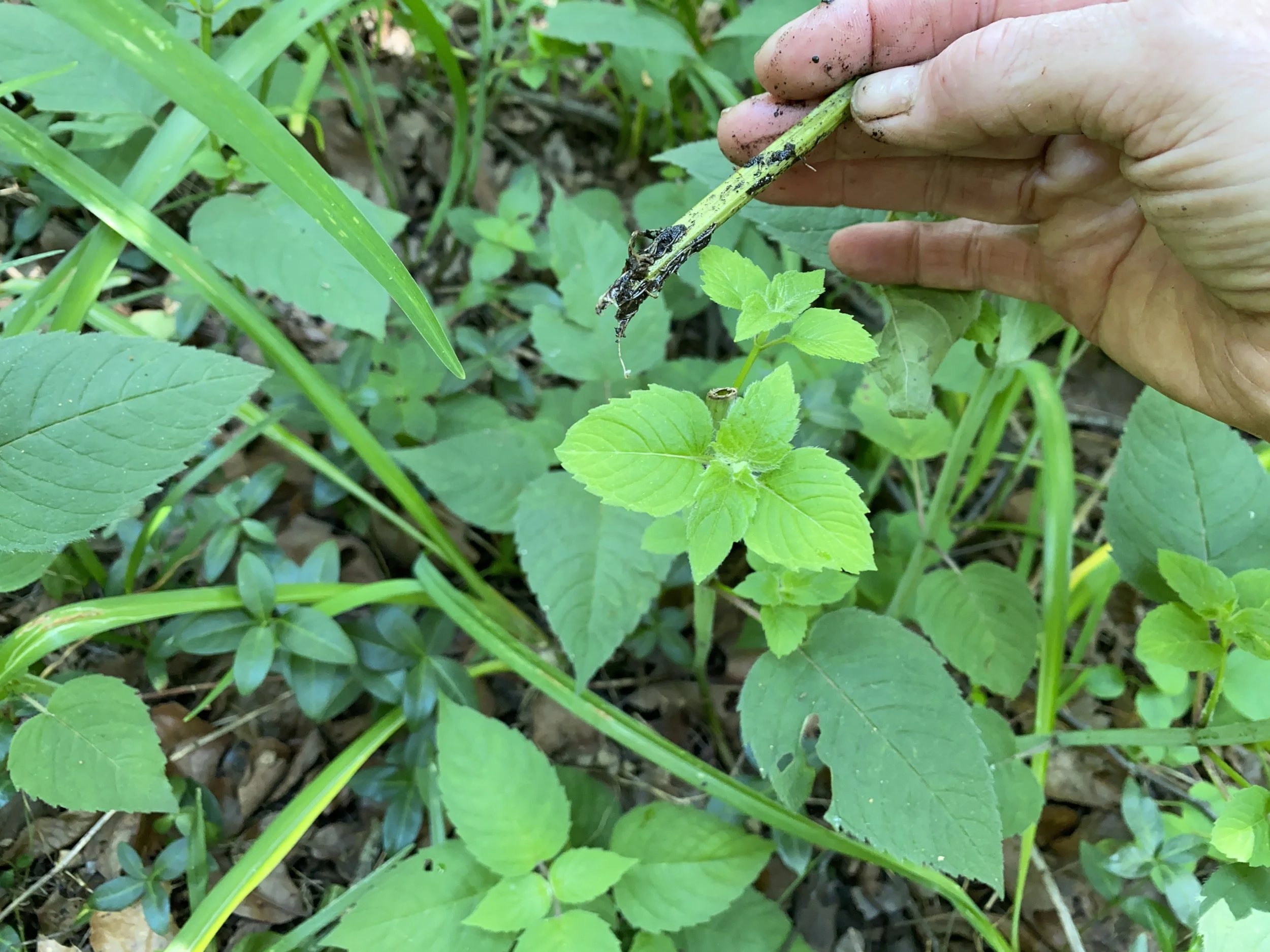
pinched bee balm pieces planted are now growing roots for more plants. (charlotte ekker wiggins photo)
Two for One; Free and Bushier Plants
Every gardener eventually discovers a wonderful truth: sometimes cutting a plant back makes it better. One of the best examples is a technique known as the Chelsea Chop—a simple pruning method that encourages bushier growth, stronger stems, and more flowers. As an added bonus, those pruned stems can often become brand-new plants at no cost.
The Chelsea Chop gets its name from the famous Chelsea Flower Show in England, which takes place in late May. Around the same time, gardeners selectively cut back certain perennials to control their size and improve flowering performance.
The process is simple:
Cut back the top one-third to one-half of selected plants.
Make cuts just above a set of healthy leaves.
Water plants well after pruning if weather is dry.
The result? Plants become shorter, sturdier, and bushier. Flowering is often delayed by a few weeks, extending bloom season later into summer and fall.
Plants That Respond Well
Many common garden favorites benefit from a Chelsea Chop:
Sedum (Autumn Joy type
Garden phlox
Asters
Goldenrod
Joe-Pye weed
Yarrow
Bee balm
Chrysanthemums
Herbs
Some gardeners cut back the entire plant. Others prune only half the stems, creating a staggered bloom period with flowers appearing over a longer season.
Don't Throw Away Those Cuttings!
Here's where the real magic happens. Many of the stems removed during a Chelsea Chop can be rooted into entirely new plants. Instead of tossing cuttings into the compost pile, try propagating them.
How to Root Chelsea Chop Cuttings
Select healthy stems 4–6 inches long.
Remove flowers or flower buds if present.
Strip leaves from the lower half of the stem.
Insert stems into moist potting mix, perlite, or a mixture of both.
Keep the medium evenly moist.
Place in bright shade rather than direct sun.
Maintain humidity by covering loosely with a clear plastic dome or bag.
Depending on the species, roots may develop in two to six weeks. Many perennials root readily, including:
Bee balm
Phlox
Sedum
Yarrow
Chrysanthemums
Asters
Penstemon
Salvia
Roses
Before long, you'll have extra plants for filling empty garden spaces, sharing with friends, donating to community gardens, or expanding pollinator habitat.
For more gardening, beekeeping, cooking and easy home decor tips, subscribe to Garden Notes.
Charlotte