Flowering Dogwood Stories
/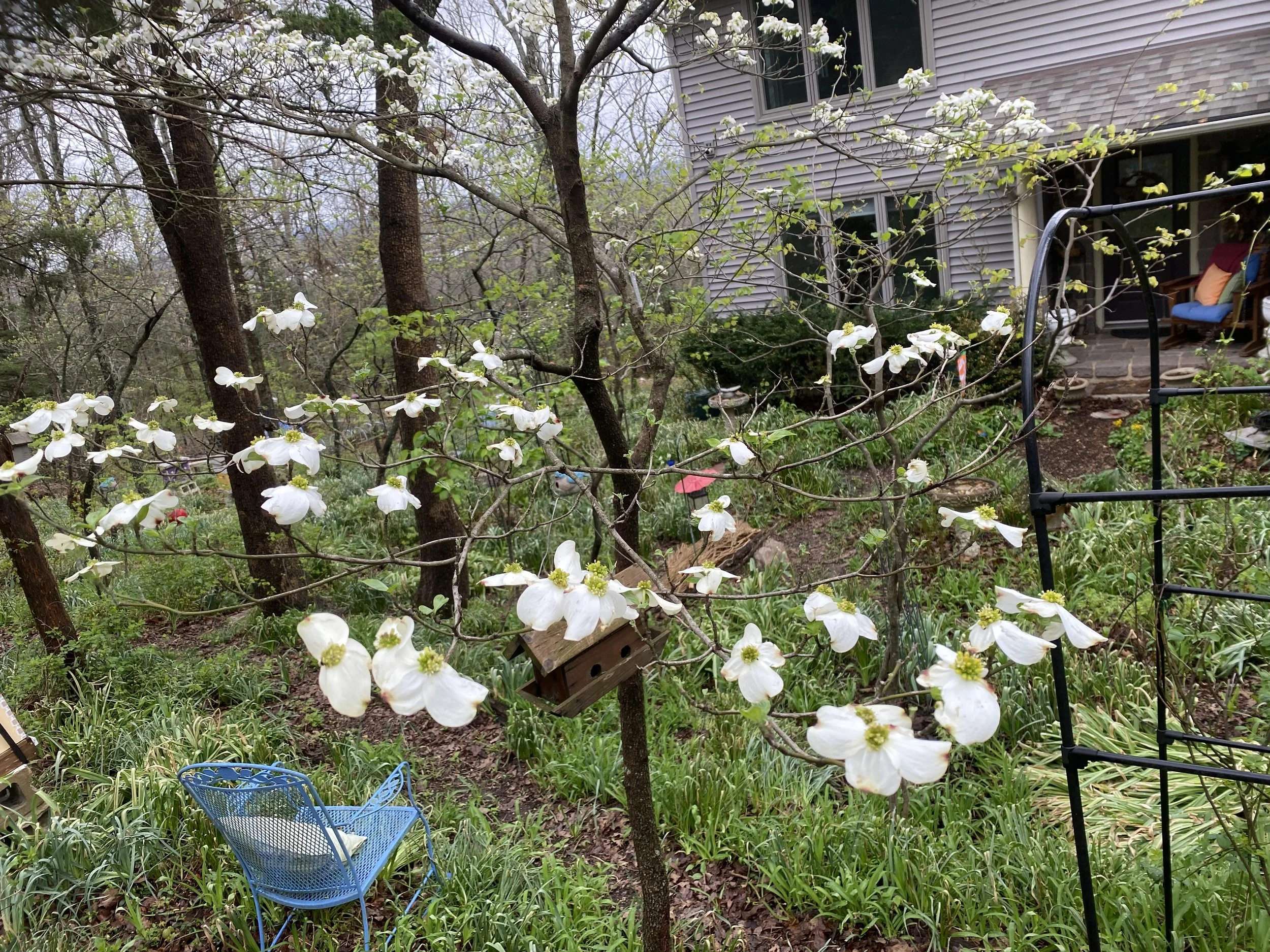
It took Theodore flowering dogwood a couple of decades before he grew more than 3 feet tall. (charlotte ekker wiggins photo)
The Stories Blooming in the Dogwoods
Every spring, just as the garden begins to stretch awake, the flowering dogwood steps quietly into view—never loud, never showy, but somehow impossible to ignore. For many of us, especially here in the US Midwest and South, the dogwood isn’t just a tree. It’s a storybook.
The native Cornus florida has gathered more folklore than almost any other US ornamental tree. And like all good garden stories, the truth matters less than the meaning that’s grown alongside it.
One of the most widely shared legends ties the dogwood to Easter. According to the story, the dogwood was once a tall, strong tree—large enough to be used in the Crucifixion. Afterward, the tree was said to be transformed: never again would it grow large enough for such a purpose. Instead, it would remain small and delicate, its blossoms carrying reminders of the event.
Look closely at a dogwood bloom and you’ll see why the story endured. The four petal-like bracts form a cross. The tips are often tinged with a rusty red, said to represent nails. At the center sits a tight cluster, sometimes described as a crown. Whether or not you place stock in the legend, it’s hard to deny how naturally the symbolism fits the flower’s structure.
But not all dogwood stories are solemn.
In parts of Appalachia and the Ozarks, dogwood blooms were once used as a kind of seasonal clock. Old-timers would say “when the dogwood blooms, it’s safe to plant.” It’s not great advice - we all know spring likes to play tricks - but it’s rooted in observation. Dogwoods tend to flower after the worst of winter has passed, often aligning with soil temperatures warming enough for seeds and transplants to stand a fighting chance.
There’s also a quieter folklore tied to protection. Some traditions held that planting dogwoods near the home would guard against misfortune. Whether that came from their early bloom—signaling renewal—or simply from their graceful presence, no one can quite say. But it’s easy to understand why people would want them close.
As gardeners, especially those of us who spend days thinking about pollinators and plant relationships, the dogwood offers more than stories. Its early blooms provide nectar and pollen for emerging bees. Its berries feed more than 30 bird species fall and winter. It’s a bridge plant—connecting seasons, species, and yes, even generations of gardeners.
For more weekly gardening, beekeeping, cooking and easy home decor tips, subscribe to Garden Notes.